Grapple Truck Debris Removal Services: Efficient Cleanup Solutions for Property Owners

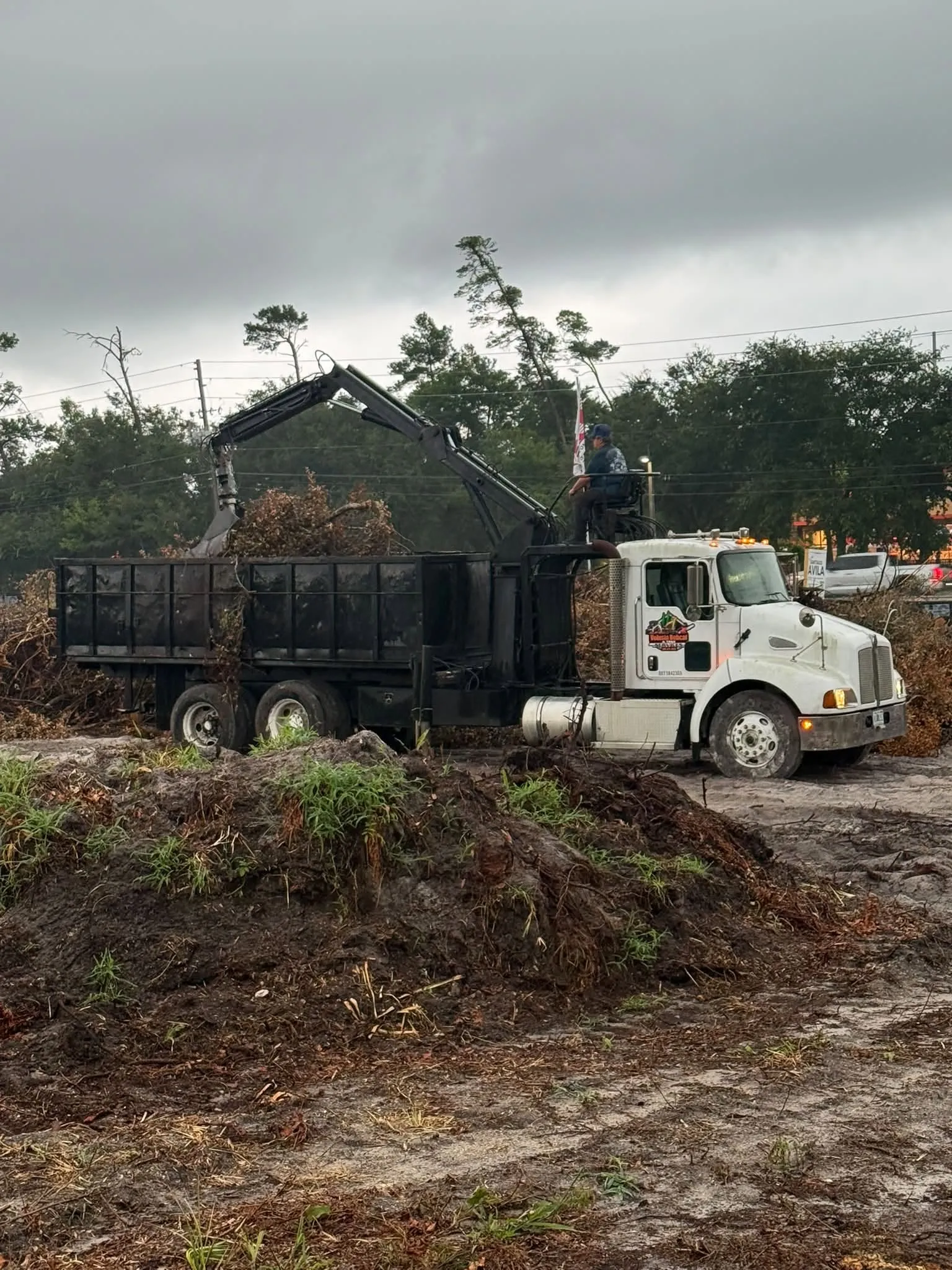
Grapple truck debris removal combines heavy-lift equipment and skilled operators to clear large volumes of organic and mixed waste quickly, making it a top choice for property owners facing storm damage, land clearing, or post-trimming cleanup. This article explains what a grapple truck is, how its hydraulic grapple and knuckle boom accelerate loading and hauling, and why that efficiency translates to faster site recovery and reduced liability for homeowners and contractors. Readers will learn the core equipment components, typical service workflows for storm and tree debris hauling, the suite of services available for residential and commercial properties, and practical cost drivers that affect quotes. The guide also maps common homeowner preparations, local service-area considerations for Volusia County, and concise answers to frequently asked questions that homeowners and contractors commonly search for. Throughout the article we use industry terms like knuckle boom crane, hydraulic grapple, and debris volume while offering clear, actionable steps to prepare for a grapple truck visit and how to get an accurate estimate.
What Is a Grapple Truck and How Does It Enhance Debris Removal Efficiency?
A grapple truck is a heavy-duty truck mounted with a knuckle boom crane and hydraulic grapple that picks up, loads, and deposits debris into a truck bed or transfer container, dramatically speeding bulk removal compared with manual labor. The mechanism works by closing the grapple claw over branches, logs, or mixed waste, lifting high-capacity loads, and placing them into the bed or a roll-off — this reduces handling cycles and cuts site labor needs. For property owners, the direct benefit is throughput: more cubic yards removed per hour, quicker site clearance, and less time that hazards remain onsite. Understanding these equipment components and their lifting capacities clarifies why grapple trucks are central to rapid storm response and large-scale land clearing.
How Does a Grapple Truck Work for Tree and Storm Debris?
Grapple trucks operate through a simple workflow: assess and stage debris, position the vehicle for reach and safe swing radius, use the knuckle boom to grab piles or standing material, then place loads into the truck bed or transfer container for transport. Operators typically start by creating safe work zones, sorting debris by type when possible, and prioritizing hazards such as hanging limbs or obstructive trunks; this triage speeds subsequent hauling. Common materials handled include limbs, trunks, brush, and mixed construction waste after storms or removals. This staged, mechanical approach minimizes manual handling and accelerates disposal coordination with recycling or landfill facilities, preparing the site for final grading or repair.
Before showing specific features, consider the common materials grapple trucks handle and how that affects operations and disposal choices.
Branches and limbs: Easily picked and bundled into truck beds for chipping or disposal.
Logs and trunks: Lifted whole or in sections, typically hauled to recycling or biomass facilities.
Mixed construction debris: Loaded for transport to appropriate disposal sites with sorting as required.
Bulk yard waste: Large piles collected quickly without multiple crew lifts.
These materials influence load weight, bed configuration, and disposal routing, which leads into the technical features that enable that capability.
What Are the Key Features of Grapple Trucks Used in Debris Hauling?

Grapple trucks combine a knuckle boom crane, hydraulic grapple (claw), reinforced truck bed or roll-off system, and operator controls that allow precise lifting and placement; together these meronyms define the machine's capability. The knuckle boom provides compact articulation and reach, while the hydraulic grapple secures irregular loads, enabling operators to pick mixed debris without extensive manual sorting. Load capacity varies by model but common mid-size grapple trucks handle thousands of pounds per lift, meaning fewer cycles and lower labor costs for high-volume removal. Safety systems such as load-sensing hydraulics, operator cab protections, and on-site traffic controls further reduce risk during heavy lifts and swinging operations.
This equipment baseline leads directly to a comparison of why mechanical removal is often preferable to manual labor on larger jobs.
Why Choose Grapple Truck Services Over Manual Debris Removal?
Grapple truck services deliver speed, decreased labor costs, and improved safety compared with manual crews working with chainsaws and pickup trucks, especially when volumes exceed a few cubic yards. Mechanized loading reduces time on-site by eliminating repetitive hand-loading, lowering the chance of worker injury and property damage while shortening overall project timelines. For large residential cleanups, storm response, and commercial land clearing, the cost per cubic yard often becomes favorable once volume and accessibility are considered. Homeowners benefit from reduced liability because professional crews document removal, use safety protocols, and coordinate proper disposal, which together reduce post-job claims and hazards.
The next section explains which specific grapple truck services property owners and contractors commonly request and how those services are structured.
Which Grapple Truck Debris Removal Services Does Volusia Bobcat & Tree Service Offer?

Grapple truck services cover a range of use cases from emergency storm response to routine site cleanups, and providers typically package offerings around outcome-focused deliverables like full-site clearance or curbside pickup. For property owners in Volusia County, these service categories include storm debris cleanup, tree debris hauling, land clearing debris management, residential yard waste removal, and commercial site solutions that scale to contractor needs. Each service follows a similar workflow—assessment, staging, mechanical loading, haul-away, and documented disposal—which helps ensure predictable timelines and transparent deliverables for clients. For readers seeking a local provider that integrates these capabilities with safety and insured operations, the next paragraphs explain Volusia Bobcat & Tree Service’s role in delivering these outcomes.
Volusia Bobcat & Tree Service operates locally with an emphasis on safety-first crews, insured tree service operations, 24/7 emergency availability, and practical local expertise to coordinate disposal and routing efficiently. Their full-service approach means a single point of contact manages assessment, grapple-truck deployment, and disposal logistics, reducing scheduling complexity for homeowners and contractors. For property owners who want to request a service or a free estimate, gathering photos of piles, access constraints, and an outline of affected areas speeds the quoting process. The company’s local knowledge helps in matching disposal options and sequencing work to minimize downtime for residential properties and commercial sites.
The following lists summarize common service lines and what each typically includes, followed by a table that clarifies service scope.
Grapple truck offerings commonly include the following service lines:
Storm Debris Cleanup: Rapid bulk removal, hazard mitigation, and staged haul-away after wind or storm events.
Tree Debris Hauling: Limb, trunk, and brush removal with final site clean finish.
Land Clearing Debris Management: Bulk vegetation and construction-waste removal for new development or lot prep.
Residential Yard Waste Removal: Curbside or on-site pile pickup for homeowners with bulky yard waste.
Commercial Grapple Solutions: Recurring site cleanups, contractor coordination, and large-scale hauling contracts.
These core services align with homeowner and contractor needs and help reduce the time from assessment to a cleared, repair-ready property.
Service Type | Typical Inclusions | Examples / Scope |
|---|---|---|
Storm Debris Cleanup | Emergency triage, bulk loading, haul-away | Rapid-response clearing after hurricanes or severe storms |
Tree Debris Hauling | Limb and trunk loading, site brooming, disposal | Post-tree-removal clean finish for yards and lots |
Land Clearing Management | Brush removal, mixed debris loading, staging | Lot prep for construction or pasture conversion |
Residential Yard Waste | Bulk pile pickup, access assessment, curbside prep | Homeowner cleanups and seasonal yard projects |
Commercial Solutions | Scheduled cleanups, large-volume hauling, coordination | Contractor sites and municipal pickup programs |
This table clarifies what each grapple-truck service delivers and helps property owners match needs to the appropriate offering. The next section highlights why local trust signals matter when choosing a provider.
How Does Storm Debris Cleanup Work with Grapple Trucks?
Storm debris cleanup with a grapple truck starts with a rapid site assessment to identify hazards and prioritize removal zones, then staging equipment to maximize reach and minimize obstruction for operations. Crews create safety perimeters and coordinate with property owners or emergency services as needed, focusing first on hanging limbs and blocked egress points before bulk pile removal. The grapple’s ability to pick and load mixed piles reduces sorting time, enabling continuous loading cycles and faster transfer to disposal facilities or chipping operations. Typical timelines for initial clearing depend on volume and access but mechanized loading often reduces what would be days of manual labor into hours for comparable cubic volumes.
What Is Included in Tree Debris Hauling Services?
Tree debris hauling typically includes limb and trunk removal, mulching or chipping options, bed loading, site brooming, and documented haul-away to approved disposal or recycling locations. Many providers offer a “clean finish” as part of the service, meaning stumps may be left in place if not requested but the visible yard area is restored for safe access and aesthetic recovery. When arborist oversight is necessary—such as complex rigging or aerial cuts—operators coordinate with certified teams to ensure safe handling and minimal property disturbance. Disposal options vary and local expertise helps determine whether chipping, composting, or landfill routes are most appropriate for different debris types.
How Is Land Clearing Debris Managed Using Grapple Trucks?
In land clearing scenarios, grapple trucks remove brush, trees, and mixed construction debris as part of site preparation, enabling follow-on grading and excavation work to proceed quickly. Management involves staging zones for large volumes, coordinating haul routes to minimize site congestion, and ensuring environmental controls—such as erosion prevention measures—are maintained during clearing. Grapple trucks excel at handling uneven loads and irregular vegetation, which speeds throughput and reduces the number of supporting machines required on site. This coordination with graders and excavators lowers overall project timelines and helps contractors meet schedule-critical milestones.
What Residential Yard Waste Removal Services Are Available?
Residential yard waste removal with a grapple truck is ideal for homeowners with large volumes of debris from trimming, storm fallout, or property cleanups that exceed curbside limits. Services usually require homeowners to pile debris in accessible locations, note any underground utilities or obstructions, and provide clear access paths for the truck; following these guidelines results in faster on-site operations and more accurate estimates. Providers will often set volume limits or per-load pricing depending on local disposal costs and travel time, and they may offer recurring pickups for seasonal maintenance. Homeowners should expect a quick on-site visit and a documented disposal path that reduces liability and simplifies insurance claims when needed.
What Commercial Grapple Truck Solutions Are Provided?
Commercial solutions scale grapple operations for contractors, municipalities, and property managers with recurring site cleanups, large-volume hauling, and scheduling flexibility that aligns with project phases. Services can be contracted for single-event clearances or ongoing removal throughout construction, enabling consistent throughput and integration with grading, excavation, and paving schedules. Providers offer coordination to match site demands—such as off-peak loading windows or staged deliveries—to reduce disruptions to job-site activities. For contractor clients, documented load manifests and disposal receipts support project accounting and regulatory compliance.
A clear listing of typical commercial scopes helps property and project managers choose the right level of service and scheduling cadence.
Why Should Property Owners Choose Volusia Bobcat & Tree Service for Grapple Truck Debris Removal?
Selecting a provider that pairs equipment capability with local knowledge and safety-first operations reduces friction and risk during debris removal projects. Volusia Bobcat & Tree Service emphasizes insured tree service practices, trained crews that follow safety protocols, 24/7 emergency readiness for storm response, and local expertise in Volusia County disposal options and routing. These trust signals matter because they affect response time, liability exposure, and the efficiency of disposal logistics—factors that translate to lower overall project durations and smoother insurance interactions. For property owners weighing providers, understanding these UVPs clarifies how professional grapple operations protect both people and property.
How Do 24/7 Emergency Services Benefit Storm Cleanup?
Round-the-clock emergency services shorten the time hazardous debris remains on a property by enabling same-day or next-available-window responses, which is crucial after high-wind events. Rapid removal of downed trees and large limbs reduces the risk of secondary damage from weather or rot and helps restore safe ingress and egress for homeowners and emergency personnel. Providers with emergency readiness often maintain prioritized scheduling systems to triage the most hazardous sites first, coordinating with insurers and local agencies as needed. Faster response also mitigates the cost of interim protective measures and lowers the potential for vandalism or opportunistic theft of exposed materials.
What Safety Measures Do Our Trained Crews Follow?
Trained crews follow strict safety protocols including establishing exclusion zones, using personal protective equipment, conducting pre-shift equipment inspections, and implementing traffic control where necessary to protect bystanders and property. Equipment checks include hydraulic inspections, grapple integrity assessments, and functional testing of boom articulation to prevent mechanical failures during lifts. On-site safety also involves communication protocols between the operator and ground crew to coordinate lifts, swings, and bed placement—reducing the chance of dropped loads or accidental contact with structures. These measures protect workers, homeowners, and adjacent properties while ensuring efficient, uninterrupted progress on the job.
How Does Local Expertise Improve Service Quality in Volusia County?
Local expertise speeds routing, optimizes disposal choices based on nearby facilities, and informs crews about common storm patterns and typical vegetation types—allowing providers to anticipate job needs and necessary equipment. Familiarity with municipal permit nuances and high-volume seasonal windows reduces administrative delays and keeps projects moving, while local routing knowledge lowers travel time and fuel costs that can affect final pricing. Providers familiar with Volusia County can also advise on recycling and chipping options that align with municipal programs, potentially reducing disposal fees and environmental impact. That local context makes operations more predictable and can shorten project lead times for homeowners and contractors alike.
What Does Being an Insured Tree Service Mean for Customers?
An insured tree service carries liability coverage that protects homeowners from claims arising during on-site work, including property damage or third-party injuries, and provides a clear path for claims resolution. Customers should ask for proof of insurance and note policy scope—such as general liability and automobile coverage—so they understand the level of protection for a specific job. Insurance reduces homeowner exposure by shifting certain risks to the provider’s policy during active work, and reputable contractors will provide documentation or verify coverage during the estimate process. Knowing a provider is insured gives homeowners confidence that removal operations are backed by financial protections should unforeseen damage occur.
How Does Our Full-Service Offering Simplify Debris Removal?
A full-service offering means the provider handles assessment, equipment deployment, mechanical loading, haul-away, and disposal coordination so the property owner has one point of contact through project completion. This approach reduces scheduling friction between multiple contractors, simplifies invoicing and documentation for insurance claims, and speeds final site turnover because the provider sequences tasks efficiently. For homeowners, that single-provider convenience reduces the need to coordinate dumpsters, separate chipping crews, or multiple haulers—saving time and minimizing dispute risk. Full-service arrangements also often include cleanup verification and disposal receipts, which support transparency and post-job assurance.
How Much Does Grapple Truck Debris Removal Cost and What Factors Affect Pricing?
Grapple truck pricing depends on several variables including debris volume, site accessibility, debris type, disposal fees, and travel/time; these drivers combine to determine per-job estimates rather than a flat nationwide rate. As a contextual example, a Deltona service page lists a "Grapple Service" that includes brush, limb, and trunk removal with a clean finish and is offered for $350 in Deltona, which illustrates a localized sample price point rather than a universal rate. Property owners should provide photos, approximate pile volumes, and access notes to get an accurate written estimate, because small differences in access or mixed-waste content can materially affect disposal requirements and labor. Understanding these cost drivers helps homeowners anticipate potential price ranges and identify which factors they can control to reduce expense.
Price Driver | Why It Matters | Typical Impact |
|---|---|---|
Debris Volume | More cubic yards = more truck cycles | High |
Accessibility | Narrow gates or steep slopes require extra labor | Medium to High |
Debris Type | Mixed waste may need sorting or special disposal | Medium |
Disposal Fees | Local landfill or recycling costs vary | Medium |
Travel / Time | Distance and on-site duration add labor/travel charges | Low to Medium |
This table clarifies how each factor influences quotes and why detailed job information produces a more accurate price. Next, we illustrate typical local price context and guidance on obtaining an estimate.
What Is the Typical Price for Grapple Truck Service in Deltona and Surrounding Areas?
The Deltona service page example lists a Grapple Service at $350, which demonstrates a localized entry-level price for brush, limb, and trunk removal delivered with a clean finish; however, that figure depends on pile size, access, and disposal routes. In surrounding Volusia County locations, prices may be higher when jobs require additional crew time, complex rigging, or longer haul distances to appropriate disposal facilities. Peak season demand after storms can also elevate rates or extend scheduling windows, so homeowners should seek estimates promptly after storm events. Requesting a free estimate with photos and an access description yields the most accurate price and helps homeowners compare options objectively.
Which Factors Influence Grapple Truck Service Pricing?
Each quote reflects a combination of measurable drivers: volume in cubic yards, accessibility constraints, debris composition, disposal fees, and travel/time; higher levels in any driver increase total cost. Volume is often the dominant driver because it dictates the number of truck cycles required, while access issues can add labor or specialized equipment costs. Mixed debris containing construction materials or hazardous items triggers sorting and potentially higher disposal fees, which raises the effective per-cubic-yard charge. Transparent estimates will spell out these drivers so homeowners understand whether price changes reflect scope or logistical realities, and this transparency reduces dispute risk.
How Can Property Owners Get a Free Estimate for Grapple Truck Services?
To obtain a free estimate, property owners should supply clear site photos showing pile size and access, describe driveway or gate width constraints, note any utilities or obstructions, and indicate desired timing or urgency for the job. Many providers use these inputs to offer a preliminary written estimate and may follow with an on-site inspection for complex jobs; providing volume estimates in cubic feet or by number of pickup-truck loads can speed the process. Response times vary by provider and seasonality, but emergency requests after storms often receive prioritized scheduling when 24/7 services are available. Preparing this information makes the estimate more accurate and shortens the scheduling timeline.
Service Type | Price Driver | Typical Impact (Low/Med/High) |
|---|---|---|
Residential Pickup | Volume & Access | Medium |
Storm Debris | Urgency & Volume | High |
Commercial Contract | Scheduling & Scale | Medium to High |
Land Clearing | Debris Type & Disposal | High |
This pricing-driver table helps align expectations for different job types and illustrates why similar jobs may quote differently across clients.
What Are the Main Service Areas for Grapple Truck Debris Removal in Volusia County?
Service coverage in Volusia County typically focuses on towns and unincorporated areas where rapid routing, local disposal facilities, and seasonal storm exposure shape operational readiness and cost. Local providers prioritize coverage in population centers to minimize travel time and coordinate with nearby recycling or chipping facilities, which reduces disposal fees and speeds project completion. For property owners, understanding whether a provider consistently operates in their town affects response times and familiarity with municipal permit requirements. Below we highlight Deltona as a notable example and outline other service-area considerations that influence routing and scheduling.
How Does Volusia Bobcat Serve Deltona with Grapple Truck Services?
Volusia Bobcat & Tree Service serves Deltona with grapple truck capabilities tailored to common local needs such as hurricane-season storm cleanup and routine tree-trimming haul-away; the Deltona service page lists a Grapple Service for $350 as an example price for basic brush, limb, and trunk removal with a clean finish. Local service in Deltona benefits from predictable routing to nearby disposal or chipping facilities, which helps contain travel-related pricing impacts and shortens turnaround times. Scheduling options reflect local demand patterns, with emergency availability prioritized during storm windows to reduce hazards on residential streets. Homeowners in Deltona should provide clear access information and photos to speed the free-estimate process.
Which Other Volusia County Locations Benefit from Our Grapple Truck Cleanup?
Providers operating broadly in Volusia County commonly serve neighboring towns and unincorporated areas where similar storm and tree profiles exist; these may include residential neighborhoods, commercial corridors, and rural lots that require large-volume handling. Local presence ensures crews can optimize daily routing across jobs to reduce travel time and respond faster to emergent requests. Being active across multiple towns also builds knowledge of preferred disposal facilities and municipal permit practices that can reduce administrative delays. Property owners should confirm service-area coverage and typical response windows to ensure expectations align with provider capabilities.
How Does Local Environmental Knowledge Impact Cleanup Efficiency?
Knowledge of local disposal facilities, seasonal storm patterns, and municipal permitting requirements allows providers to anticipate bottlenecks and select efficient disposal or recycling routes, reducing cost and time on-site. For example, choosing a nearby composting or biomass facility for woody debris lowers haul time and may reduce tipping fees compared with long-distance landfill routes. Seasonal forecasts and historical storm timing help providers stage crews proactively to minimize response windows after events. This local intelligence translates to predictable scheduling and clearer estimates for property owners.
What Are the Most Common Questions About Grapple Truck Debris Removal?
Property owners frequently ask concise, practical questions about grapple truck capabilities, permitting, suitability for residential yards, and emergency response timing; direct answers help people decide when to use mechanical removal versus alternative approaches. This section provides snippet-ready answers to the most common queries so readers can quickly assess whether a grapple truck is appropriate for their situation and what to prepare before scheduling service. Each short answer is designed for clarity and to support quick decision-making, with links conceptually suggested to deeper sections in this article for full context.
What Is a Grapple Truck Used for in Debris Removal?
A grapple truck is used to mechanize the lifting, loading, and hauling of large volumes of organic and mixed debris—such as branches, trunks, brush, and construction waste—enabling rapid bulk removal from residential, commercial, and land-clearing sites. Its hydraulic grapple secures irregular loads, while the boom provides reach, allowing a single operator to load multiple cubic yards per cycle. This makes grapple trucks ideal for storm cleanup, tree-hauling after removals, and clearing lots before construction. For homeowners, the primary benefit is reduced on-site time and fewer manual labor hours required.
Can Grapple Trucks Remove Trees and Large Branches?
Yes—grapple trucks can remove large branches and sections of trunks once cut into manageable lifts, but whole tree removals that require rigging, stump grinding, or aerial work often need coordinated arborist crews and additional equipment. Grapple trucks excel at picking up the resulting debris after trees are felled or sectioned, making them a standard companion to tree-removal operations. For complex removals near structures or power lines, providers coordinate with certified crews to ensure safe rigging and staged lifts. Homeowners should clarify scope when requesting an estimate to include any required arborist or stump services.
Do I Need a Permit for Grapple Truck Debris Removal?
Permit requirements depend on your municipality and the job type; routine yard waste and private property cleanups often do not require permits, but large land clearing, commercial projects, or work in protected zones may trigger local permitting rules. Because regulations vary by town, providers with local expertise can advise clients on whether permits are likely and can assist in the application process for complex or large-scale jobs. Homeowners should check municipal guidelines for land alteration and contact their provider for permit-support if unsure. When in doubt, secure written guidance before starting major clearing to avoid fines or delays.
Are Grapple Trucks Suitable for Residential Yard Waste?
Grapple trucks are suitable for residential yards with large volumes of debris or bulky items that exceed curbside service limits; they are less practical for small, bagged yard waste intended for municipal pickup. Homeowners should prepare by placing debris in consolidated piles away from overhead lines, marking obstructions, and ensuring driveway and gate access meet minimum width standards for safe truck entry. Providers will advise on safe pile placement and any access or surface protection required for soft driveways. Proper preparation reduces on-site time and improves the accuracy of the initial estimate.
How Quickly Can Emergency Storm Debris Cleanup Be Scheduled?
Emergency scheduling depends on provider capacity and peak-season demand; outside major storm events, same-day or next-day responses are common, while during wide-area hurricanes or severe events, response windows may extend to 24–72 hours or longer based on triage priority. Providers with 24/7 emergency capability prioritize hazardous sites first—such as blocked roads or downed lines—then proceed to high-volume residential clearances. Providing clear photos and an access description at the time of request helps providers triage and schedule more effectively. Understanding expected windows helps homeowners plan interim safety measures until crews arrive.
How Does Grapple Truck Debris Removal Support Efficient Storm and Land Cleanup?
Grapple trucks play a central role in community-level storm recovery by enabling bulk triage and removal of hazardous materials, which accelerates re-opening of roads and restoration of essential services. At the land-clearing scale, their throughput reduces the number of machines and labor hours required to prepare sites for grading and construction, which shortens project timelines and lowers contracting costs. Efficient professional removal also limits homeowner liability by removing tripping hazards and hazardous debris quickly and providing documented disposal records for insurance claims. The combined operational, legal, and scheduling benefits make grapple-truck-enabled cleanup a cornerstone of modern storm response and land development workflows.
What Role Do Grapple Trucks Play in Rapid Storm Damage Recovery?
After major wind events, grapple trucks enable rapid bulk removal by prioritizing hazards and clearing public egress routes, allowing emergency services and infrastructure repairs to proceed faster. Their ability to load mixed piles without extensive manual sorting reduces job staging time and speeds trucking cycles to disposal or chipping facilities. Coordination with municipal crews and insurers is often part of large-scale recovery, providing documented removal that helps with claims and restores safe access sooner. This triage-to-haul model is why many communities depend on mechanized removal during recovery periods.
How Do Grapple Trucks Facilitate Large-Scale Land Clearing Projects?
For large-scale land clearing, grapple trucks deliver high throughput for vegetation and mixed debris, allowing grading and foundation crews to move in sooner and maintain construction schedules. They integrate with excavation and grading teams by creating defined staging areas and removing material in predictable cycles, which reduces downtime for heavy equipment waiting on debris removal. Because grapple trucks can handle irregular loads, fewer support machines are required, reducing total equipment costs for contractors. This economy of scale accelerates project timeline and lowers per-cubic-yard handling costs for developers and contractors.
How Does Efficient Debris Removal Reduce Property Owner Liability?
Removing hazardous debris quickly mitigates injury risks for visitors, tenants, and workers, lowering the likelihood of premises liability claims and enabling property owners to document a professional mitigation effort through disposal receipts and manifests. Insured providers add an extra layer of protection because liability shifts to the contractor’s coverage during active work, and documented procedures demonstrate due diligence in case of post-event disputes. Clear records and timely removal also support insurance claims by showing proactive hazard mitigation, which can be important in adjudicating loss and recovery. This risk-reduction benefit is a core reason many homeowners choose professional grapple-truck removal.
For property owners ready to take action, a concise set of next steps and a final call to request service follows.
Prepare photos and access details: Clear images and notes on gates, driveways, and overhead lines speed accurate estimates.
Consolidate debris where possible: Grouping like materials near accessible staging areas reduces on-site handling time.
Ask for disposal documentation: Request manifests or receipts to support insurance claims and verify proper disposal.
Request a written free estimate: Include volume estimates and urgency level to get a timely, accurate quote.
These actionable steps help property owners secure the right service quickly and with clear expectations.
For property owners or contractors seeking a reliable local provider, Volusia Bobcat & Tree Service offers insured, safety-first crews and 24/7 emergency capabilities to handle storm debris, tree-hauling, land clearing, and residential or commercial grapple-truck solutions. To request a free estimate, prepare photos, access notes, and an outline of your timeline so the provider can respond with a clear scope and pricing. In Deltona, a local service listing cites a Grapple Service offering brush, limb, and trunk removal with a clean finish for $350 as a contextual example; actual quotes will vary by site specifics. If urgent hazard removal is needed after a storm, request emergency scheduling and provide priority details so crews can triage appropriately.
Collect site photos and notes: Enables faster, more accurate estimates.
Describe access and obstructions: Prevents surprises and extra charges.
Indicate urgency: Prioritizes scheduling for hazardous or emergency work.
Volusia Bobcat & Tree Service’s local knowledge and documented safety practices help streamline these steps and reduce project friction.
Component | Attribute | Example / Value |
|---|---|---|
Grapple | Lifting capacity | Example: 2,000+ lbs per lift |
Knuckle Boom | Reach & articulation | Precise placement in tight yards |
Truck Bed | Volume capacity | Multiple cubic yards per load |
Safety Systems | Operator protections | Load sensing, exclusion zones |
This equipment-focused table summarizes why these components together create high-throughput, safe debris removal operations.
If your property requires rapid, insured, and safety-focused debris removal, prepare photos and access details now and request a free estimate to secure scheduling. For emergency situations, note hazard locations and urgency so crews with 24/7 availability can prioritize response and reduce immediate risks. Volusia Bobcat & Tree Service’s local expertise in Volusia County disposal and routing helps convert estimates into efficient on-site action, providing the documentation homeowners need for insurance and repair planning.