Find Expert Stump Grinding Services Near You in Volusia County

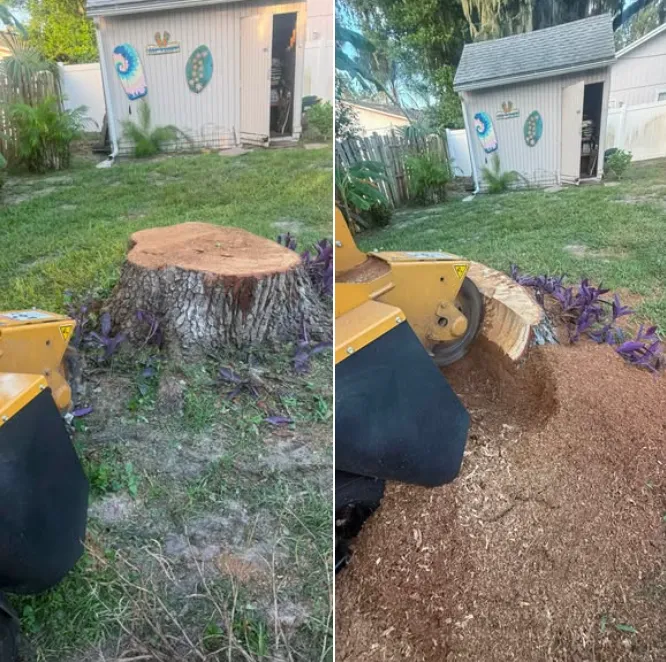
Stump grinding is the mechanical removal of a tree trunk’s remaining base using a specialized grinder to reduce the stump to wood chips, eliminating trip hazards and freeing the landscape for reuse. This guide explains why professional stump grinding in Volusia County matters, how the grinding process works in local soils and root systems, where to find reliable local services, typical cost drivers, and common homeowner questions. Property owners face issues such as regrowth, disease sites, and interference with landscaping or fence installation; stump grinding solves those problems by removing the visible stump and chipping or chasing roots to a depth that supports re-sodding, fencing, or hardscape. You will learn step-by-step assessment and equipment choices, realistic timelines for cleanup and replanting, cost factors to expect in Volusia County, and safety practices that reduce liability. The article covers benefits and risks, the full service process with a process table, service-area mapping, a cost factor table, and a practical FAQ tailored to Volusia County conditions and homeowner outcomes.
Why Choose Professional Stump Grinding Services in Volusia County?
Professional stump grinding removes hazards, prevents pest and disease harborage, and prepares your yard for new landscaping or construction by reducing the stump and chasing roots below grade. In Volusia County's sandy, occasionally compacted soils, trained crews assess root spread and adjust grinding depth to stop regrowth and protect nearby hardscapes. Choosing professionals reduces homeowner risk because trained operators follow safe equipment practices, control debris, and provide clear post-service options like on-site mulching or chip removal. Below are the primary homeowner benefits and the practical outcomes you can expect from a properly executed grinding service.
Professional service advantages in Volusia County extend beyond aesthetics to long-term landscape health, and the next section explains specific ways grinding eliminates hazards and readies property for reuse.
How Does Stump Grinding Eliminate Hazards and Improve Your Property’s Appearance?
Stump grinding eliminates trip hazards and unsightly remnants by reducing the trunk to wood chips and removing protruding roots near the surface. This creates a level area that improves curb appeal and clears space around pools, patios, and walkways, allowing homeowners to re-sod or extend patios without uneven ground. In Volusia County, where yards often receive heavy foot traffic and seasonal storms, removing stumps also reduces places where debris collects and insects nest. By smoothing the grade and removing visible obstacles, grinding directly enhances safety and the visual continuity of the landscape.
Reducing visible hazards leads naturally to questions about regrowth and disease risk, which the next subsection addresses.
Why Is Preventing Stump Regrowth and Disease Important?
Preventing stump regrowth and disease is essential because retained stumps can send up root suckers and harbor fungal pathogens that spread to nearby plants. Grinding to the appropriate depth and chasing surface roots significantly reduces the ability of the root system to generate new shoots and decreases moisture pockets that encourage decay organisms. Professional grinding minimizes disease reservoirs on a property and reduces long-term maintenance costs by stopping regrowth before it begins. Effective prevention also helps avoid future removal complexity and protects the value of neighboring trees and plantings.
Understanding regrowth prevention clarifies why many homeowners choose grinding prior to new landscaping projects; next we explain how grinding reclaims usable outdoor space.
How Can Stump Grinding Help You Reclaim Usable Outdoor Space?
Stump grinding frees space for fences, patios, flower beds, or new lawns by removing the central obstruction and reducing roots that block construction or planting. Once a stump is ground and chips are managed, homeowners can fill and compact the hole or incorporate the chips as mulch depending on the project plan. For fence installation or concrete work, grinding and root chasing prevent later settling and root interference, shortening construction prep time. The ability to repurpose the area within weeks—rather than waiting months for slow decomposition—makes grinding a practical solution for property upgrades.
Clearing space is the operational goal; the next section describes the exact process crews follow in Volusia County to deliver those outcomes.
What Is the Stump Grinding Process in Volusia County?

Stump grinding in Volusia County follows a predictable sequence: a site assessment, choice of grinder and access planning, grinding to the required depth, debris handling, and post-grind site preparation for replanting or construction. This stepwise approach ensures predictable outcomes and minimizes collateral damage to lawns or hardscapes. Local crews adapt the sequence based on stump size, species, proximity to structures, and Volusia soil conditions, which influence root behavior and grinding depth. Below is a breakdown of the typical process steps, estimated durations, and deliverables so homeowners know what to expect.
Step | Typical Duration | Deliverable |
|---|---|---|
Initial assessment and quote | 15–30 minutes onsite | Written estimate, assessment notes (size, access, hazards) |
Equipment setup and site protection | 10–30 minutes | Protective barriers, clear work area |
Grinding and root chasing | 20–90 minutes per stump | Stump reduced below grade, surface roots removed |
Debris handling and cleanup | 15–45 minutes | Chips removed or spread, site broomed |
Final inspection and client walk-through | 5–15 minutes | Acceptance, post-service recommendations |
This process table shows how each phase produces a clear deliverable and why accurate assessment leads to predictable outcomes for homeowners.
How Do We Provide Accurate Initial Assessments and Free Quotes?
An effective initial assessment documents stump diameter, species, root spread, access constraints, and proximity to structures or utilities so quotes reflect real work scope. Technicians measure stump diameter, note obstacles like fences or pools, evaluate soil conditions common to Volusia County, and identify safety considerations that affect time and equipment needs. Transparent quotes itemize these factors so homeowners understand price drivers rather than seeing a flat, unclear figure. For example, a free estimate will typically note whether root chasing is required for fencing or hardscape prep, and homeowners are advised on next steps and timelines to reuse the area.
Providing accurate assessments supports predictable scheduling and prepares the property owner for post-grind options; the next subsection explains the equipment used to achieve those results.
What State-of-the-Art Equipment Is Used for Efficient Stump Grinding?
Modern stump grinders range from compact portable units to larger track-mounted or tow-behind machines, and choosing the right type affects speed, precision, and site impact. Portable grinders suit tight residential yards with limited access, while track-mounted grinders provide higher power and stability for large-diameter stumps or multiple-stump jobs. Safety features such as guards, emergency stops, and dust-control attachments reduce risk and minimize site contamination. Selecting the proper grinder reduces grinding time, limits surface disturbance, and improves chip size for easier cleanup or mulch use.
Equipment choice directly influences grinding depth and debris options, which we explore in the next subsection.
How Is Grinding Depth and Debris Managed During Service?
Grinding depth depends on homeowner goals: a shallow grind may remove the visible stump, while a deeper grind (often several inches below grade) and root chasing reduce regrowth and prepare the soil for re-sodding, fencing, or concrete. Crews control debris by either collecting and hauling chips, spreading chips on-site as mulch, or offering removal for a cleaner finish. Volusia soil drainage and local landscaping needs influence whether chips are used as mulch or removed; crews advise on compaction and soil amendments when filling the hole. Cleanup standards typically include brooming and a client walk-through to confirm expectations are met.
Debris decisions determine post-grind choices like replanting or hardscape installation, discussed in the following subsection.
What Are Your Post-Grinding Options for Mulching, Filling, or Replanting?
After grinding, homeowners choose between leaving wood chips as mulch, having chips hauled away, filling the hole with topsoil and compacting for immediate replanting, or preparing the area for hardscape by adding engineered fill. On-site chips offer instant mulch benefits but may temporarily tie up nitrogen as they decompose, which professionals mitigate by recommending soil amendment practices. If replanting a tree, crews often advise waiting and preparing the planting hole with fresh topsoil and root removal where necessary. For fence or concrete work, proper compaction and engineered fill prevent future settling and provide a stable base for construction.
Choosing the right post-grind option depends on your reuse plan; the next section shows where to find local crews and service pages.
Where Can You Find Local Stump Grinding Services in Volusia County?
Volusia County residents can locate local stump grinding providers through service-area pages that list city-specific offerings, typical response times, and specialized services like emergency grinding or land clearing. Local pages help homeowners understand access limitations and regulation nuances for each municipality, and they often include notes on common species and soil conditions in that area. Service-area content also clarifies availability for emergency response and whether crews offer grapple service or land-clearing integration. Below is a service-area mapping table that clarifies which services are commonly offered in major Volusia cities and typical response notes.
City | Services Offered | Typical Response Notes |
|---|---|---|
Deltona | Residential stump grinding, root chasing, chip disposal | Local crews often reach Deltona quickly for standard jobs |
DeLand | Stump grinding, land clearing integration, mulch options | Access near historic districts may require extra care |
Ormond Beach | Residential/commercial grinding, hardscape prep | Sandy soils favor quick chipping and re-sod prep |
Daytona Beach | Emergency grinding, stump removal, debris hauling | Coastal access and permit awareness may impact timing |
Orange City / Debary | Grinding, fence prep, chip spreading | Suburban access allows efficient scheduling |
This city mapping helps homeowners identify likely service availability and plan for local conditions and timing.
What Stump Grinding Services Are Available in Deltona, FL?
In Deltona, homeowners typically find residential stump grinding that includes stump reduction, root chasing for fence or hardscape preparation, and options for chip removal or on-site mulching. Local crews can tailor grinding depth to prepare areas for re-sodding or fence post installation, advising on soil compaction and fill timelines. Deltona service pages often include notes about access considerations for subdivision yards and suggestions for scheduling around local weather patterns. If you need a free estimate or want to confirm availability for a Deltona property, request a site assessment to obtain a transparent scope and timeline.
Knowing what’s offered locally clarifies expectations; the next subsection lists other Volusia cities commonly served.
Which Other Volusia County Cities Do We Serve for Stump Grinding?
Many providers cover a cluster of Volusia County cities—DeLand, Ormond Beach, Daytona Beach, Orange City, Debary, and surrounding neighborhoods—offering similar stump grinding services adapted to each area’s access and soil. Coverage often includes both residential and light commercial properties, with some crews offering emergency response or integration with land-clearing and grapple services for larger jobs. Homeowners should check a local city page to confirm service boundaries and any municipal permit considerations when major root systems or street-side work is involved. Contacting a nearby service area representative provides the fastest way to schedule an assessment.
Having mapped service coverage, homeowners often ask about cost; the next section breaks down price drivers and sample ranges.
How Much Does Stump Grinding Cost in Volusia County?

Stump grinding costs in Volusia County vary based on stump diameter, tree species and root complexity, accessibility, required grinding depth, and whether chips are removed or retained as mulch. Transparent quotes reflect these factors so homeowners understand line-item drivers instead of encountering surprise fees. Typical residential pricing models consider per-stump or hourly rates adjusted for large-diameter stumps and difficult access; the table below summarizes key cost drivers and sample influence on price to help homeowners estimate budgets before requesting a free quote.
Price Factor | Why It Matters | Typical Impact on Price |
|---|---|---|
Stump diameter | Larger stumps require more grinding time | Moderate to high increase |
Tree species/root system | Deep or dense roots take longer to grind | Moderate increase |
Accessibility | Tight yards or obstacles slow setup and work | Moderate increase |
Depth required | Deeper grinding and root chasing adds time | Moderate to high increase |
Chip disposal | Hauling away chips adds labor/truck costs | Small to moderate increase |
This EAV-style table clarifies how each attribute contributes to a final price so homeowners can compare quotes more effectively.
What Factors Affect the Price of Stump Grinding Services?
Several predictable factors affect price: stump diameter measured at ground level, root complexity linked to species, whether the stump is near structures or utilities, access route for equipment, and whether chips are left on-site or hauled away. Additional considerations include the number of stumps in a single visit, the need for land-clearing equipment for multiple stumps or heavy debris, and any required permits or municipal regulations that increase time. Providing photos and accurate access notes during the quote request helps vendors produce transparent estimates that reflect these variables rather than generic guesses.
Understanding price factors makes requesting a detailed quote more effective; the next subsection explains how to obtain a free transparent estimate.
How Can You Get a Free and Transparent Stump Grinding Quote?
To receive a clear estimate, prepare photos of the stump from multiple angles, note distance to the nearest access point, describe proximity to structures or utilities, and indicate desired grinding depth or plan for the space after grinding. Most providers offer free estimates based on that information or an on-site inspection that records diameter, root spread, and equipment access needs. Expect a written quote that itemizes stump counts, diameter-based pricing, any root-chasing line items, and chip disposal options so you can compare scenarios like leaving chips as mulch versus full removal. Requesting a free estimate with detailed photos accelerates turnaround and reduces the chance of later adjustments.
Clear quoting practices reduce surprises and set expectations for safety and scheduling, which leads naturally to homeowner FAQs that address common concerns.
What Are the Most Common Questions About Stump Grinding in Volusia County?
Homeowners most often ask whether grinding removes roots, how long a job takes, whether grinding causes noise or mess, what happens to the chips, and whether replanting is possible immediately after grinding. Short answers help set realistic expectations: grinding removes the stump and surface roots but not the entire root system, single-stump jobs usually take under an hour depending on size, noise and chips are expected but can be managed, chips can be used or removed, and replanting often requires specific soil work. Below are concise, actionable answers to each frequent question to help homeowners decide next steps.
Will Stump Grinding Remove the Roots Completely?
Stump grinding removes the above-ground trunk and portions of surface roots, but it typically does not remove the full root system extending deep and outward from the original tree. Surface roots within the grinder’s reach are reduced, which prevents suckering and most regrowth, but deeper structural roots remain and decompose over time or can be excavated if complete root removal is required. For projects that demand full root removal—such as underpinning foundations or when disease is present—additional excavation services are recommended. Grinding combined with selective root removal balances cost and results for most residential needs.
Knowing what grinding removes informs realistic expectations about job time, which the next FAQ covers.
How Long Does the Stump Grinding Process Take?
A typical single-stump grinding session often ranges from 20 to 60 minutes depending on stump diameter, root complexity, and site access; multi-stump jobs scale with the number and size of stumps and may take several hours or a full day. Setup and cleanup add extra time: protection of nearby structures, equipment positioning, and chip handling all extend the appointment beyond active grinding time. Weather, access difficulties, and required safety measures also affect total time. When scheduling, ask the provider for an estimated window that includes setup and cleanup so you can plan accordingly.
Time expectations connect to concerns about noise and mess, which we address next.
Does Stump Grinding Create Noise or Mess?
Stump grinding produces high-decibel mechanical noise and wood chips, and homeowners should expect vibration and dust during active grinding; however, experienced crews mitigate impact through scheduling, protective barriers, and debris control. Scheduling noisy work during daytime windows minimizes neighborhood disruption, and crews commonly use dust suppression and containment when working near homes or vehicles. Post-job cleanup typically includes chip sweeping, optional chip removal, and a final inspection to confirm the site meets homeowner expectations. Clear communication about noise and cleanup expectations with the provider ensures a smoother experience.
Noise and dust management influence chip handling choices, described below.
What Happens to the Wood Chips After Grinding?
Wood chips can be left on-site for mulch use, spread and composted over time, or hauled away for disposal—each option has pros and cons based on your reuse plan. On-site chips provide immediate mulch but may temporarily reduce available nitrogen in soil; spreading thinly or allowing chips to age before planting mitigates this effect. Removal yields a cleaner finish ready for immediate re-sodding or hardscape installation but typically adds a disposal charge. Providers will advise which option suits your timeline and landscape goals.
Chip handling choices affect replanting plans, which the next FAQ explains.
Can I Replant a Tree in the Hole Left by Stump Grinding?
Replanting is possible but typically requires soil preparation to address residual roots, potential disease, and compaction; many professionals recommend waiting several months for decomposition or removing major roots and adding fresh topsoil before planting. Immediate planting into compacted or chip-filled holes risks poor root establishment; instead, replacing the grind zone with amended topsoil and allowing a short settling period improves success. When disease or heavy root mass is present, deeper excavation and soil replacement may be necessary to avoid repeating problems. Professional advice tailored to your site’s species and soil conditions yields the best long-term results.
How Does Volusia Bobcat & Tree Service Ensure Safe and Insured Stump Grinding?
Volusia Bobcat & Tree Service emphasizes insured, safety-first operations and offers services in Volusia County that include 24/7 emergency response, stump grinding, tree removal, trimming, grapple service, and land clearing. Their stated approach focuses on transparent quotes, free estimates, competitive pricing, multiple payment options, and a customer satisfaction guarantee—practical trust signals that homeowners can use to evaluate providers. Safety and local expertise matter in Volusia County for reasons like soil variability and municipal considerations, and professional crews document their practices to reduce homeowner liability and deliver predictable results.
What Safety Measures Do Our Crews Follow During Stump Grinding?
Crews follow standard safety measures including personal protective equipment (PPE), site hazard assessment, equipment inspection, and establishing exclusion zones to protect people and property during grinding. Operators perform pre-use machine checks, secure loose debris, and use guards or barriers to control chip ejection and dust. Clear communication with the homeowner about pets, children, and parking ensures the site remains safe during operations. Consistent adherence to these measures reduces incident risk and supports a smoother, faster job completion.
Safety measures highlight why insurance and local knowledge matter in Volusia County, explained next.
Why Is Choosing an Insured Local Service Important in Volusia County?
Choosing an insured local provider reduces homeowner liability in case of accidental damage and provides recourse through documented policies, while local experience ensures crews understand county-specific soil types, typical species, and municipal permit nuances. Local teams respond faster to emergency requests and can advise on how coastal or inland conditions affect root depth and grinding depth decisions. Insurance protects both the crew and the homeowner from unforeseen events, and local knowledge speeds accurate quoting and efficient execution. These combined factors reduce cost surprises and project delays.
Transparent quoting and guarantees complete the trust picture and are described in the next subsection.
How Do Transparent Quotes and Customer Satisfaction Guarantee Work?
Transparent quotes list the line items that drive price—stump diameter, access, required depth, chip disposal—and offer clear payment and scheduling options so homeowners can compare scenarios side-by-side. A customer satisfaction guarantee typically covers follow-up touch-ups or corrections within a stated window and clarifies expectations for cleanup and post-service recommendations. Multiple payment options and a written estimate help homeowners budget and schedule without ambiguity. When providers include a satisfaction promise, it signals accountability and a willingness to address issues that arise after the job.
For homeowners ready to act, ask for a free estimate and specify photos, access notes, and your intended post-grind plan to get a transparent scope and timeline from a local insured provider.
Request Photos: Take clear photos showing the stump from multiple angles and any access constraints.
Describe the Goal: Specify whether you plan to re-sod, install a fence, or add hardscape.
Ask for Line-Item Quotes: Ensure quotes list diameter, access fees, root-chasing, and chip disposal separately.
Volusia County Stump Grinding: Services, Process, and Costs
Stump grinding is the mechanical removal of a tree trunk’s remaining base using a specialized grinder to reduce the stump to wood chips, eliminating trip hazards and freeing the landscape for reuse. This guide explains why professional stump grinding in Volusia County matters, how the grinding process works in local soils and root systems, where to find reliable local services, typical cost drivers, and common homeowner questions. Property owners face issues such as regrowth, disease sites, and interference with landscaping or fence installation; stump grinding solves those problems by removing the visible stump and chipping or chasing roots to a depth that supports re