Best Tree Fertilizing Practices for Volusia County: Expert Guide to Healthy Trees and Local Compliance

Proper tree fertilization supplies essential nutrients that support root development, foliar health, and resilience against pests and storms in Volusia County's challenging sandy soils and humid climate. This guide explains why targeted fertilizing matters in Volusia County, how local soil and weather drive nutrient needs, and which practices comply with the county fertilizer ordinance while protecting water quality. Readers will learn a clear seasonal calendar for when to fertilize around the June–September blackout, step-by-step soil testing and interpretation guidance, and species-specific recommendations for common trees such as oaks, palms, and citrus. The article also compares application methods (granular, root-injection, foliar), outlines environmentally friendly options like slow-release and organic amendments, and shows when to hire a certified arborist. Throughout, practical checklists, EAV tables, and actionable tips support homeowners and landscape managers in maintaining healthy trees that meet regulatory requirements and reduce runoff risk.
Why Is Tree Fertilization Important for Volusia County Trees?
Tree fertilization is the targeted addition of nutrients to the soil or root zone to correct deficiencies and improve tree vigor, especially where natural fertility is low. In Volusia County, sandy soils and frequent heavy rains reduce nutrient retention and increase leaching, so strategic fertilization helps trees maintain growth, leaf color, and canopy density. Proper nutrition strengthens root systems and improves tolerance to pests, salt spray in coastal zones, and drought stress, reducing long-term maintenance and safety issues. The following subsections explain local soil and climate drivers, common deficiencies, and the measurable benefits of correct fertilization.
What Soil and Climate Challenges Affect Tree Nutrition in Volusia County?

Volusia County soils are often sandy with low organic matter, which limits cation exchange capacity and causes rapid nutrient leaching after heavy rains. Coastal salt spray and episodic storms increase physiological stress on trees and can exacerbate micronutrient imbalances, while high summer temperatures raise metabolic demand for nitrogen and water. Practical mitigation includes adding organic mulch to increase soil moisture retention, using slow-release fertilizers to reduce soluble nutrient loss, and scheduling irrigation to reduce leaching events. Understanding these physical drivers helps property owners choose fertilizers and timing that compensate for the county's soil and climate limitations.
Understanding Sandy Soil Properties for Effective Fertilization in Volusia County
Sandy soils contain high proportion of sand particles, more than sixty eight percent by weight in their mechanical composition. They are common in the drylands, but many soils in the humid and subhumid regions are also sandy. They may be moist for variable periods in the low lands and humid regions, and dry in the high lands where they are low moisture retentive. Sandy soils are naturally poorly fertile, and when they are fertilized and irrigated, they cannot retain much water and nutrients.
Sandy soils, 2018
Which Nutrient Deficiencies Are Common in Florida Trees?
Several nutrient deficiencies show distinct foliar symptoms in Volusia County trees, with nitrogen, magnesium, iron, and manganese commonly implicated due to sandy soils and pH effects. Nitrogen deficiency presents as uniform chlorosis and reduced growth, while magnesium often causes interveinal yellowing on older leaves and slower canopy development. Iron and manganese deficiencies usually show interveinal chlorosis on younger leaves and may respond best to foliar or chelated treatments in acidic to neutral soils. Early symptom recognition and confirmation through soil or tissue testing prevent unnecessary phosphorus applications and ensure targeted, cost-effective corrective measures.
- The most common nutrient symptoms in Volusia County include:
Uniform yellowing and reduced vigor from low nitrogen.Interveinal chlorosis on older leaves indicating magnesium shortage.Yellowing on young leaves consistent with iron or manganese deficiency.
These symptom checks guide whether to test soil or pursue targeted amendments; when in doubt, professional diagnosis through sampling yields reliable treatment direction.
How Does Proper Fertilization Improve Tree Health and Growth?
Proper fertilization enhances root proliferation, leaf area, and carbohydrate reserves, enabling trees to recover from pruning, storm damage, or drought more quickly. Improved nutrient status increases resistance to pests and diseases and helps trees maintain structural integrity during storm events, which is crucial for public safety and property protection. Observable improvements typically appear within a growing season for foliar color and vigor, while root and structural gains accumulate over multiple seasons with consistent management. Combining fertilization with mulching and correct irrigation amplifies benefits and reduces the need for repeated applications.
What Are the Key Rules in the Volusia County Fertilizer Ordinance?
This section summarizes the ordinance in actionable terms so property owners can comply while maintaining tree health. The ordinance includes a fertilizer blackout period to protect water quality, strict controls on phosphorus use tied to soil-test results, slow-release nitrogen requirements to limit soluble losses, and setbacks near water bodies to reduce runoff. Below are concise answers to the most important regulatory elements and practical implications for application timing and product selection.
When Is the Fertilizer Blackout Period in Volusia County?
The ordinance establishes a fertilizer blackout period that restricts most fertilizer applications to protect surface waters during the wet season. This blackout runs from June 1 through September 30 and is intended to prevent nutrient runoff when heavy rains are most likely to carry soluble fertilizers into waterways. During the blackout, focus on non-fertilizer maintenance like mulching, pruning, and irrigation adjustments rather than applying phosphorus- or nitrogen-rich products. Planning applications in spring and late fall helps maintain nutrient status while staying compliant with water-quality protections.
Volusia County Growers Achieve BMP Compliance for Water and Fertilizer Use
Early in 2013, Volusia County began with seven growers who were enrolled in the Florida Department of Agriculture and Consumer Services (FDACS) Best Management Practices (BMP) program. By early 2016, a total of 73 growers within Volusia County became compliant along with the state BMPs.
Leading the Charge! Volusia County Leaders in the State BMP Enrollment, 2013
What Are the Phosphorus and Nitrogen Restrictions Under the Ordinance?
Phosphorus application is limited and generally requires a soil test demonstrating a deficiency before any P is applied, because Florida soils often already contain adequate phosphorus. Nitrogen products must contain a minimum percentage of slow-release nitrogen to reduce soluble nitrate losses during rain events; product labels should be checked for slow-release content. Selecting fertilizers with high slow-release N percentages and relying on soil/tissue tests to guide phosphorus use both meet regulatory intent and reduce wasteful applications. Practical product selection focuses on label literacy—identify slow-release N percentages and avoid phosphorus unless tests confirm need.
| Regulation Element | Requirement | Practical implication for property owners |
|---|---|---|
| Blackout period | No fertilizer June 1–Sept 30 | Schedule fertilization in spring or late fall; rely on mulch during blackout |
| Phosphorus use | Requires soil test showing deficiency | Test before applying P; avoid blanket phosphorus applications |
| Slow-release nitrogen | Minimum % slow-release N required | Choose products showing slow-release N on label to reduce runoff risk |
| Setbacks | Restrictions near water bodies | Apply fertilizers outside buffer zones or use non-fertilizer stabilization |
This table clarifies the major ordinance elements and helps homeowners translate legal text into on-the-ground choices for products and timing.
How Do Setbacks from Water Bodies Affect Fertilizer Application?
Setbacks reduce the chance that applied nutrients will enter ponds, lakes, and streams; they often require limiting or avoiding fertilizer within a buffer zone adjacent to water bodies. Property owners should implement vegetated buffers, avoid broadcast applications within the setback, and consider targeted root-zone treatments or soil-building approaches instead. Erosion control measures like mulching and installing native groundcover also help stabilize banks and reduce the need for fertilizer near water. When in doubt about exact distances or local variations, default to conservative buffers and soil-improving practices that protect water quality.
What Are Common FAQs About Volusia County Fertilizer Regulations?
Homeowners frequently ask whether bagged lawn products are permitted, how enforcement works, and what exceptions exist for agricultural operations or professional applicators. In short: read product labels for slow-release N content, do not apply fertilizer during the blackout, and obtain a soil test before adding phosphorus. Enforcement typically focuses on repeat or egregious violations that cause water-quality impacts, and professional applicators can help ensure label compliance and proper documentation. When questions remain, consult local extension resources or hire a certified arborist to interpret soil tests and recommend compliant treatments.
- Quick answers to common questions:
Read labels—select products with advertised slow-release N.
Avoid applying fertilizer during June 1–Sept 30.
Only apply phosphorus if a soil test shows deficiency.
These practical bullets help homeowners remain compliant and prioritize tree health without risking runoff or penalties.
When and How Should You Fertilize Trees in Volusia County?
Timing and method matter more in Volusia County than product brand because sandy soils and heavy rainfall dictate reduced runoff risk and targeted nutrient placement. Fertilize in defined windows outside the blackout, choose slow-release formulations, and place material in the active root zone to maximize uptake and minimize losses. This section gives a seasonal calendar, compares fertilizer types with a concise EAV table, explains application methods, and outlines frequency guidance by tree age and goal.
What Is the Seasonal Fertilization Calendar for Florida Trees?
A simple calendar favors early spring and late fall applications, avoiding the June–September blackout to prevent nutrient runoff during heavy rains. For established trees, schedule a primary application in late winter to early spring to support seasonal growth and a lighter maintenance feeding in late fall to replenish reserves before dormancy. Newly planted trees benefit from lighter, more frequent feedings timed to growth spurts but avoid heavy applications that stress roots. Planning around the blackout preserves water quality while delivering nutrients when roots can most effectively absorb them.
Which Fertilizer Types Are Best for Volusia County Trees?
Different fertilizer formats serve specific roles: slow-release granular fertilizer provides long-term nutrition with low runoff risk, liquid foliar feeds correct rapid deficiencies, and root-injection or deep-root feeding targets stressed trees needing fast root-zone correction. Homeowners should prefer slow-release granular products for routine maintenance in sandy soils and reserve root injections for trees with limited root access or significant decline diagnosed by testing. Product selection should prioritize slow-release nitrogen and appropriate micronutrient blends for palms or citrus where needed.
| Fertilizer Type | Key attribute | Best use-case |
|---|---|---|
| Slow-release granular | Gradual N release, low runoff risk | Routine maintenance of established trees |
| Liquid foliar spray | Quick correction of foliar deficiencies | Short-term correction for micronutrient issues |
| Root-injection / deep-root feeding | Direct placement into root zone | Rapid correction for declining or compacted-root trees |
| Organic amendments | Build soil organic matter | Long-term soil health and microbial support |
This EAV table helps match product types to site conditions and treatment goals, guiding homeowners and professionals toward the lowest-risk, most effective options for Volusia soils.
What Are the Recommended Fertilizer Application Methods?
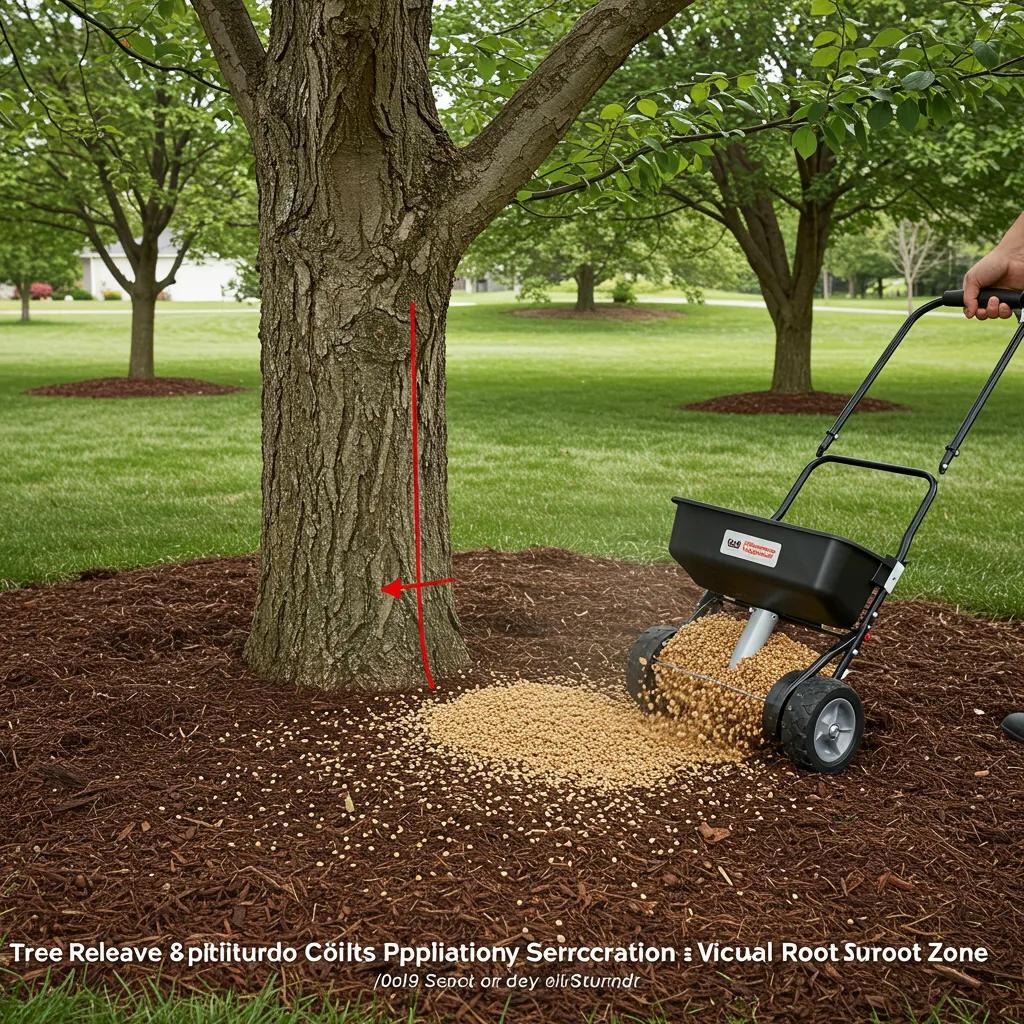
Place granular fertilizer uniformly beneath the canopy but not against the trunk, concentrating within the tree's root zone and extending slightly beyond the drip line where feeder roots are active. Avoid trunk applications and overlapping lawn fertilizer on tree-root zones to minimize salt or nutrient stress and potential runoff. For severely deficient or declining trees, certified applicators can perform deep-root feeding or root injections to deliver nutrients directly to feeder roots. Equipment calibration, adherence to label rates, and avoiding applications before forecasted heavy rain are essential safety steps for any method.
Improving Nutrient Retention in Sandy Soils with Fertigation Techniques
The main aim of this research was to investigate the role of HS fertigation on water and nutrient retention of sandy soils, as well as its effects on broccoli yield and quality.
Fertigation of humic substances improves yield and quality of broccoli and nutrient retention in a sandy soil, EM Selim, 2012
- Safe application checklist:
Calibrate spreader and follow label rates precisely.
Place material on soil surface within the root zone, not at trunk flare.
Do not apply before heavy rain or during the blackout period.
Following these steps reduces risk of over-application and environmental harm while improving uptake efficiency.
How Often Should Trees Be Fertilized in Florida?
Established trees typically need annual or biennial slow-release fertilization unless soil or tissue tests indicate otherwise, while newly planted trees often require lighter, more frequent feedings during the first two growing seasons. Corrective treatments for diagnosed deficiencies may require short-term follow-up applications, but repeated, untargeted fertilization increases runoff risk and regulatory exposure. Monitor leaf color, growth rate, and tissue test results to adjust frequency; conservative, test-driven schedules outperform blanket programs in both tree health outcomes and environmental stewardship. Regular monitoring and documentation help optimize timing and reduce unnecessary inputs.
How Do Fertilization Needs Vary Among Common Volusia County Tree Species?
Species differ in nutrient demand, root distribution, and micronutrient sensitivity, so tailored plans produce better outcomes than one-size-fits-all feeds. Oaks favor low-to-moderate nitrogen supplied slowly and benefit from magnesium monitoring, palms require higher potassium and specific micronutrients, and citrus have unique needs for nitrogen and trace elements like zinc and iron. The table below summarizes recommended NPK guidance and timing for common local trees, followed by short species-focused recommendations.
What Are the Fertilizing Requirements for Oak Trees in Volusia?
Oaks in Volusia generally respond well to slow-release nitrogen with conservative NPK ratios emphasizing nitrogen over phosphorus unless a soil test indicates low P. Magnesium deficiencies can appear in older oak leaves and are often corrected with magnesium-containing supplements or dolomitic amendments when warranted by testing. Mulching and protecting shallow feeder roots from compaction enhance nutrient uptake and root growth. Apply a slow-release granular product in early spring and consider light maintenance in late fall, avoiding the blackout window.
How Should Palm Trees Be Fertilized for Optimal Health?
Palms typically need fertilization that supplies adequate potassium and micronutrients such as magnesium, manganese, and iron; many palm-specific formulations include these micronutrients and use slow-release carriers to reduce leaching. Feeding intervals for palms vary with product formulation, but many recommend several applications per year using palm-specific blends to maintain frond color and resistance to pests. For palms showing frizzle or yellowing, foliar or soil-applied chelated micronutrients can provide quicker improvement while a longer-term program rebuilds soil reserves. Keep fertilizers away from trunk bases and distribute evenly within the root zone.
What Fertilization Practices Benefit Citrus Trees in Florida?
Citrus trees are responsive to nitrogen but require balanced micronutrients like iron, zinc, and manganese for consistent fruit quality and yield; phosphorus should be applied only after soil testing indicates need. Citrus feeding programs often use frequent, smaller applications of citrus formulations during active growth seasons to match uptake patterns and avoid nutrient surpluses. Regular soil and tissue testing is particularly valuable for citrus to tune applications and avoid phosphorus misuse. When treating citrus, choose slow-release N and incorporate micronutrient supplements based on tissue analysis rather than blanket additions.
| Tree species | Recommended NPK / Timing | Notes and cautions |
|---|---|---|
| Oak | Moderate N, low P; spring & late-fall | Watch for magnesium deficiency; mulch to protect feeder roots |
| Palm | Higher K, added Mg/Mn/Fe; multiple feeds/year | Use palm-specific slow-release blends; monitor frond color |
| Citrus | Moderate-high N, micronutrients by test; multiple small doses | Apply P only when soil test shows deficiency; use tissue tests |
This table condenses species-specific guidance to help homeowners choose appropriate formulations and timing for common Volusia County trees.
Why Choose Professional Tree Fertilization Services in Volusia County?
Professional fertilization brings diagnostic precision, safer application methods, and regulatory compliance that many homeowners cannot replicate with consumer products alone. Certified arborists combine visual inspection with soil and tissue testing to create tailored plans, use specialized equipment (deep-root feeders, injection systems) when appropriate, and document work to support compliance with local ordinances. Working with professionals reduces the risk of over-application, improper timing relative to the blackout, and nutrient runoff that can harm local waterways. The following subsections explain diagnostic workflows, advantages vs. DIY, and what clients can expect from a local provider.
How Do Certified Arborists Diagnose Tree Nutrient Deficiencies?
Arborists begin with a structured visual assessment, noting canopy density, foliar color, and growth patterns, then collect soil and leaf tissue samples for laboratory analysis to confirm suspected deficiencies. Lab results quantify nutrient levels and pH, enabling targeted prescriptions that avoid unnecessary phosphorus or broad-spectrum applications. Results are integrated with site factors—soil texture, irrigation practices, and recent treatments—to form a holistic plan that addresses root health and long-term soil improvement. This diagnostic-first approach yields precise treatments that restore tree function while minimizing environmental impact.
What Are the Advantages of Professional Fertilization Over DIY?
Professionals offer accurate diagnosis, proper product selection, calibrated application equipment, and documentation that aligns with local fertilizer rules, reducing liability and environmental risk. They can apply deep-root feeding or root injection when site conditions require targeted nutrient placement, and they interpret lab reports to prioritize corrective actions rather than repeating blanket applications. Over time, targeted professional programs can be more cost-effective by preventing tree decline and the need for expensive corrective work. In short, professional services combine technical knowledge and appropriate tools for safer, more effective tree nutrition management.
What to Expect From Volusia Bobcat & Tree Service Fertilization Plans?
Volusia Bobcat & Tree Service provides assessment-driven fertilization that begins with a Free Tree Health Assessment to identify nutrient issues and treatment priorities. Their approach can include coordinated soil and tissue testing, customized slow-release or species-appropriate formulations, and targeted application methods such as deep-root feeding when recommended by test results. Pricing, timing, and follow-up monitoring are tailored to test outcomes and tree species, with the goal of restoring vigor while meeting local ordinance requirements. Property owners seeking diagnostic-led service can request the Free Tree Health Assessment to start a test-driven plan.
How Can Soil Testing Improve Tree Fertilization Results in Volusia County?
Soil and tissue testing reveal which nutrients are truly limiting growth, preventing unnecessary applications—particularly phosphorus—and guiding product choice and placement for efficient uptake. Testing clarifies pH, cation exchange characteristics, and micronutrient levels so treatments correct the actual cause of symptoms rather than masking issues. The subsections below explain why phosphorus needs testing, how pH affects nutrient availability, and where to send reliable samples in Volusia County.
Why Is Soil Testing Essential Before Applying Phosphorus Fertilizer?
Phosphorus is often abundant in Florida soils, and adding P unnecessarily increases runoff risk without improving tree growth; soil testing confirms whether P is limiting before any application. Regulatory policy mirrors this science by restricting phosphorus use to cases where lab results show deficiency, protecting waterways from eutrophication. Testing prevents wasted expense on unneeded phosphorus and directs resources to the nutrients that will deliver measurable growth responses. In short, test-first avoids environmental harm and ensures money spent on fertilizer actually benefits tree health.
How Does Soil pH and Composition Affect Nutrient Absorption?
Soil pH controls the chemical forms of nutrients and their availability to roots—for example, iron and manganese become less available in higher pH soils, while sandy soils with low cation exchange capacity lose nutrients quickly to leaching. Adjusting pH with lime or sulfur may be appropriate in some cases, but foliar chelated micronutrients can correct acute deficiencies faster when pH adjustments are slow or impractical. Improving organic matter and mulching raises water-holding capacity and CEC, helping trees retain and access applied nutrients. Integrating pH management with proper fertilizer choice increases the efficiency of every application.
Where Can You Get Reliable Soil Testing Services in Volusia County?
Local extension services and accredited labs provide routine soil and tissue testing with interpretation templates that relate results to plant needs and local regulatory thresholds. For homeowners, the county extension is a primary resource for testing guidance and sample submission instructions; certified arborists can collect representative samples and coordinate with UF/IFAS–recommended laboratories when complex interpretation is needed. Turnaround times vary by lab, but planning sampling well before the desired application window ensures results inform product choice and timing. Volusia Bobcat & Tree Service can coordinate soil and tissue testing as part of customized fertilization plans and help interpret lab reports for proper application decisions.
- Steps to improve results using soil testing:
Collect representative soil and tissue samples following extension guidance.
Send samples to an accredited lab and await nutrient and pH results.
Use results to select products and timing; retest periodically to monitor progress.
This stepwise process aligns testing with application decisions to minimize unnecessary phosphorus and optimize nutrient uptake.
What Are Environmentally Friendly Tree Fertilizing Practices for Volusia County?
Sustainable fertilization protects local watersheds while maintaining tree vigor by prioritizing slow-release nutrients, test-driven P application, vegetative buffers, and soil-building practices. These approaches reduce soluble nutrient pools that drive runoff and combine with timing rules (avoid blackout period) to preserve water quality. The following subsections describe how slow-release and organic fertilizers function in sandy soils, practical steps to avoid runoff, and why ordinance compliance is also good stewardship for tree longevity and community health.
How Do Slow-Release and Organic Fertilizers Protect Local Water Quality?
Slow-release formulations release nitrogen gradually through physical coatings or chemical transformations, reducing the pool of immediately soluble nitrate available for runoff after heavy rains. Organic amendments such as compost increase soil organic matter and water-holding capacity, improve microbial activity, and enhance cation exchange capacity, helping retain nutrients in the root zone. In sandy Volusia soils, combining slow-release N with organic matter additions provides both immediate nutrient supply and longer-term soil improvement. Choosing products with a high percentage of slow-release nitrogen aligns with ordinance intent and reduces environmental risk.
What Are Best Practices to Avoid Over-Fertilization and Runoff?
Avoid over-fertilization by calibrating equipment, following label rates, and basing applications on soil or tissue test results rather than routine schedules. Maintain vegetated buffer zones near water bodies, avoid application before forecasted heavy rain, and use mulch to reduce surface runoff and improve infiltration. Regular monitoring—observing leaf color and growth rates, and periodic retesting—prevents cumulative nutrient buildup. These practices protect water quality and often save money by ensuring each application addresses a real need.
- Action checklist to reduce runoff:
Calibrate application equipment and adhere to label directions.
Keep a buffer zone near water and avoid broadcast spreading into it.
Time applications for dry stretches and use slow-release products.
Following this checklist reduces risk and supports long-term soil and tree health.
How Does Compliance With Local Ordinances Support Sustainable Tree Care?
Complying with Volusia County fertilizer rules not only avoids regulatory problems but also aligns tree care with watershed protection goals that benefit urban and natural ecosystems. Reduced nutrient loading preserves downstream water quality, protects aquatic life, and maintains recreational water resources that local communities value. From a tree-health perspective, test-driven, slow-release fertilization supports steady growth and reduces stress associated with boom-bust nutrient cycles. For property owners who prefer professional assistance, Volusia Bobcat & Tree Service offers assessment-led programs and can perform soil/tissue testing coordination and compliant applications; call (386) 800-2530 to request a Free Tree Health Assessment and start a test-driven plan.
This final practical step ties regulatory compliance to long-term tree and watershed health while offering a local, assessment-first option for homeowners seeking expert assistance.